Samrat Path Labs Blog
World Kidney Day: Importance of Kidney Health and Kidney Function Tests
Learn about the importance of World Kidney Day, common kidney disease symptoms, and why kidney function tests are essential for monitoring kidney health.
Google Ad Space
World Kidney Day and Its Importance
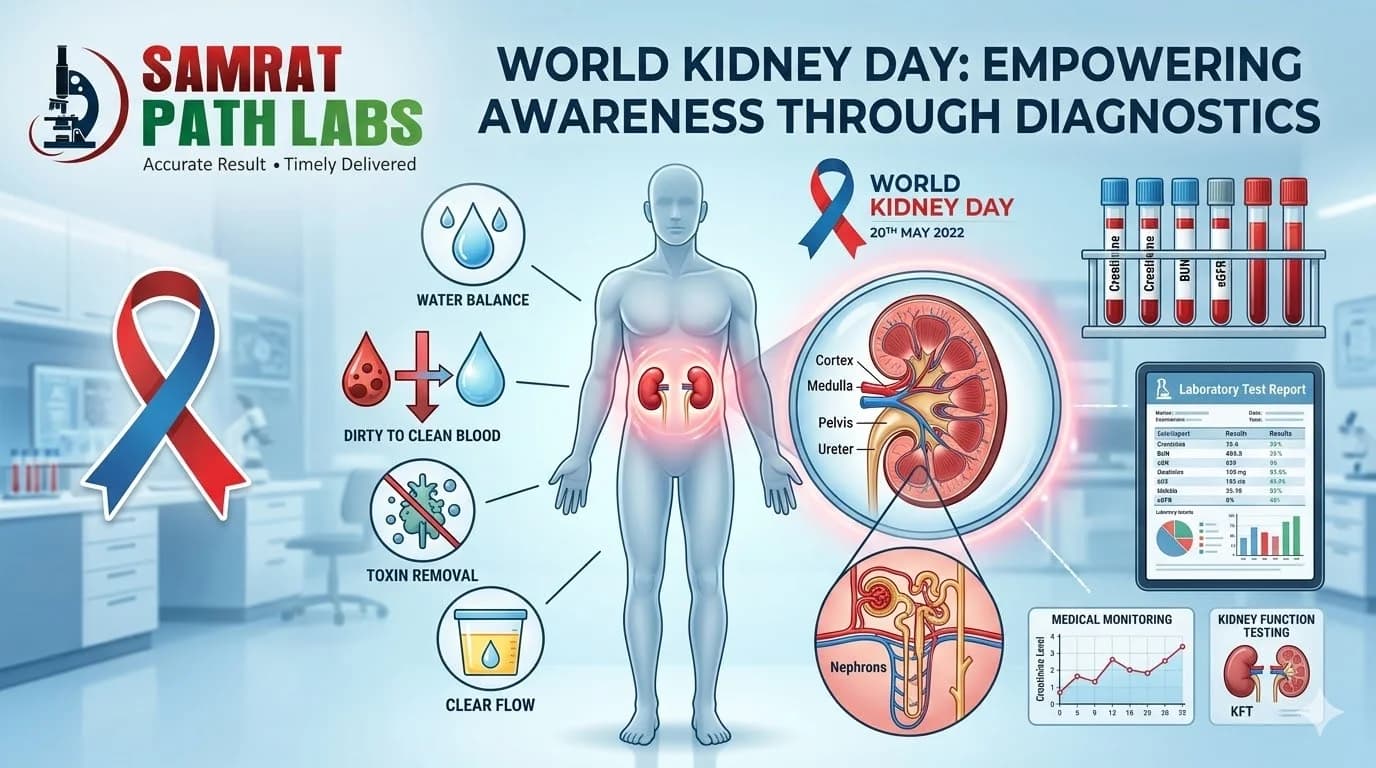
World Kidney Day is observed globally to spread awareness about kidney health and the importance of preventing kidney-related diseases. Kidneys play a vital role in maintaining the body's internal balance by filtering waste, regulating fluids, and controlling important minerals in the blood.
Many kidney diseases develop silently without noticeable symptoms in the early stages. Because of this, regular kidney health monitoring through diagnostic tests becomes extremely important.
Role of Kidneys in the Human Body
Kidneys are two bean-shaped organs located on either side of the spine, just below the rib cage. Their primary role is to filter blood and remove waste products and excess fluids from the body through urine.
Apart from filtration, kidneys also help regulate blood pressure, maintain electrolyte balance, support bone health, and contribute to red blood cell production.
Healthy kidneys ensure that toxins and metabolic waste are removed efficiently from the bloodstream, keeping the body functioning properly.
Common Symptoms of Kidney Problems
Kidney diseases often develop gradually, and symptoms may appear only when the condition has progressed. Recognizing early warning signs can help in timely diagnosis and treatment.
- Persistent fatigue and weakness
- Swelling in the feet, ankles, or face
- Frequent urination, especially at night
- Changes in urine color or urine frequency
- Difficulty concentrating
- Nausea or loss of appetite
These symptoms can indicate kidney dysfunction and should not be ignored.
Importance of Kidney Function Tests
Kidney Function Tests (KFT) are diagnostic blood tests that help evaluate how well the kidneys are working. These tests measure different markers that indicate kidney health and filtration efficiency.
Doctors often recommend kidney tests to monitor overall health, especially for people with conditions such as diabetes, high blood pressure, or a family history of kidney disease.
Early detection through these tests allows doctors to manage kidney health before serious complications occur.
Key Tests Included in Kidney Function Testing
A typical kidney function test panel may include several important parameters that provide insight into kidney performance.
Creatinine – Measures waste produced by muscles that kidneys normally filter out
Blood Urea Nitrogen (BUN) – Indicates how well kidneys remove urea from the blood
Uric Acid – Helps detect abnormal metabolism or kidney clearance problems
Calcium – Important for bone health and kidney function balance
eGFR (Estimated Glomerular Filtration Rate) – Shows how efficiently kidneys filter blood
Monitoring these markers helps assess kidney performance and detect abnormalities early.
Who Should Consider Kidney Testing
Kidney tests are especially important for individuals who may have higher risk factors for kidney disease.
- People with diabetes
- Individuals with high blood pressure
- People with a family history of kidney disease
- Individuals experiencing frequent urinary issues
- People with unhealthy lifestyle habits such as high salt intake or dehydration
- Regular screening helps maintain long-term kidney health and prevents complications.
Google Ad Space